A systematic nursing evaluation, often documented via checklists (like those found on Etsy or Amazon), ensures comprehensive patient data collection.
Purpose of a Head-to-Toe Assessment
The primary goal is to gather a baseline of patient health status, identifying both normal and abnormal findings. Utilizing resources like downloadable PDF checklists (available on Studocu, Etsy, and Amazon) streamlines this process. This detailed evaluation informs nursing diagnoses, care planning, and monitors treatment effectiveness, ultimately optimizing patient outcomes.
Importance for Nursing Practice
A thorough head-to-toe assessment is fundamental to safe and effective nursing care. Standardized checklists, readily available as PDFs (like those on Amazon or Etsy), promote consistency. This practice facilitates early detection of changes in patient condition, enabling timely interventions and improving overall quality of care, as detailed in NCBI resources.

Preparation for Assessment
Gathering equipment and ensuring patient privacy are crucial first steps, often guided by assessment checklists available in PDF format online.
Gathering Necessary Equipment
Essential tools include a stethoscope for auscultation, a blood pressure cuff, thermometer, pulse oximeter, and a penlight for neurological checks.
PDF checklists, readily available on platforms like Studocu, Etsy, and Amazon, often detail required supplies.
Having these items prepared streamlines the assessment process and promotes efficiency.
Ensuring Patient Privacy and Safety
Prioritize patient dignity by providing a private space, utilizing curtains, and explaining each step of the assessment.
Always verify two patient identifiers as highlighted in NCBI Bookshelf resources and assessment checklists.
Ensure the bed is in a low position and call light within reach for patient safety.
Assessment Procedure ⏤ Head & Neck
Evaluate neurological function, including level of consciousness and orientation, alongside a thorough pupillary exam (PERRLA) as per checklists.
Neurological Assessment (Level of Consciousness, Orientation)
Assess the patient’s alertness (A&O) and orientation to person, place, and time, documenting any deviations from normal. Utilize standardized assessment guides, often found in PDF checklists, to ensure consistency. Note any confusion or altered mental status, crucial for identifying potential neurological issues.
Pupillary Examination (PERRLA)
Evaluate pupils for size, equality, reactivity to light, and accommodation (PERRLA). Document findings meticulously, as abnormalities can indicate neurological dysfunction. Nursing assessment checklists, available as PDFs, often include dedicated sections for pupillary assessment, aiding thoroughness and accuracy.
Assessment of Cranial Nerves
Systematically assess all twelve cranial nerves, evaluating functions like smell, vision, facial movement, and swallowing. Comprehensive nursing head-to-toe assessment guides, often available as downloadable PDFs, detail each nerve’s assessment technique. Accurate documentation, facilitated by checklists, is crucial for identifying neurological changes.
Head and Scalp Examination
Inspect the scalp for lesions, tenderness, or signs of trauma, noting hair distribution and any abnormalities. Palpate for masses or areas of sensitivity. Nursing assessment checklists, frequently found as PDFs, guide this process. Document any findings meticulously, as they can indicate underlying conditions.

Assessment Procedure ⸺ Cardiovascular System
Vital signs – blood pressure, pulse, respiration, and temperature – are crucial, often recorded on standardized checklists for efficient nursing documentation.
Vital Signs (Blood Pressure, Pulse, Respiration, Temperature)
Accurate vital sign measurement is foundational; checklists, readily available as PDFs or through resources like Amazon, guide this process. Blood pressure, pulse rate (radial is common), respiratory rate, and temperature are systematically assessed and documented.
Pain assessment (often on a 0-10 scale) is also integrated into this initial vital sign evaluation, ensuring a holistic view of the patient’s condition.
Auscultation of Heart Sounds
Careful auscultation identifies normal S1 and S2 sounds, as well as potential murmurs, rubs, or gallops. Nursing assessment checklists (available as PDFs and on platforms like Etsy) emphasize listening in all auscultatory areas.
The apical pulse is specifically noted, contributing to a comprehensive cardiovascular evaluation during the head-to-toe assessment.
Peripheral Pulses Assessment
Palpation and/or Doppler ultrasound assess the strength of peripheral pulses – radial, brachial, femoral, popliteal, dorsalis pedis, and posterior tibial.
Nursing head-to-toe assessment checklists, often available as downloadable PDFs, guide documentation of pulse quality (0-4+) and equality bilaterally.
Capillary Refill Assessment
Pressing on the nail bed or skin briefly blanches it; normal capillary refill is less than 3 seconds, indicating peripheral perfusion.
Nursing head-to-toe assessment checklists, frequently found as PDFs, include space to document capillary refill times for accurate patient monitoring.

Assessment Procedure ⸺ Respiratory System
Lung auscultation at six to eight sites, respiratory rate, effort, and oxygen saturation are key components, often detailed in nursing assessment PDFs.
Lung Auscultation (6-8 Sites)
Systematically auscultate at least six to eight lung sites, comparing sounds bilaterally. Note any adventitious sounds like wheezes, crackles, or diminished breath sounds. Comprehensive nursing assessment PDFs, available on platforms like NCBI Bookshelf, often detail proper technique and expected findings.
Respiratory Rate and Effort
Observe the patient’s respiratory rate, rhythm, and depth. Note any signs of labored breathing, such as nasal flaring, retractions, or use of accessory muscles. Detailed head-to-toe assessment checklists, often available as downloadable PDFs, guide thorough observation and documentation.
Oxygen Saturation
Utilize pulse oximetry to measure the patient’s oxygen saturation levels (SpO2). Document the reading and any factors influencing it, like supplemental oxygen use. Comprehensive nursing assessment guides, including PDF checklists from resources like Etsy, emphasize accurate SpO2 monitoring.
Assessment Procedure ⏤ Abdomen
Inspect, auscultate for bowel sounds, and palpate for tenderness or distention, noting any dietary habits or last bowel movement details.
Abdominal Inspection
Begin by visually inspecting the abdomen for symmetry, contour, and any visible pulsations or masses. Note the skin’s color and presence of scars, striae, or lesions. Assess for any signs of distention, noting its location and degree. Observe for involuntary guarding or grimacing, which may indicate tenderness.
Auscultation of Bowel Sounds
Utilize the diaphragm of the stethoscope to listen for bowel sounds in all four quadrants. Document the character (normal, hyperactive, hypoactive, or absent) and frequency. Normal sounds are gurgling and clicking; absence requires further investigation. Checklist guides aid consistent assessment.
Palpation for Tenderness and Distention
Gently palpate all four quadrants for tenderness, guarding, or rigidity, noting any patient discomfort. Assess for abdominal distention, observing shape and symmetry. Documentation on a head-to-toe checklist, available on platforms like Etsy, ensures thoroughness and standardized reporting of findings.
Assessment Procedure ⸺ Musculoskeletal System
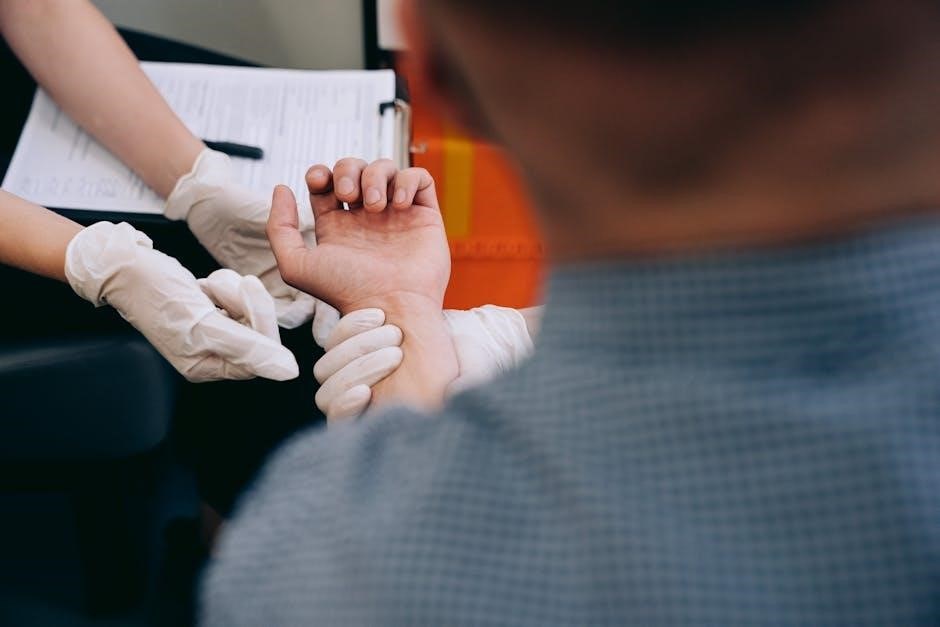
Evaluate extremity strength, edema presence, and perform Homans’ sign assessment; checklists (available as PDFs) aid systematic evaluation and documentation.
Assessment of Strength in Extremities
Systematically assess muscle strength in all extremities, comparing left to right. Evaluate for equal resistance during flexion, extension, abduction, and adduction. Document findings clearly, noting any weakness or disparities. Utilizing a standardized checklist, often available as a downloadable PDF, ensures all areas are evaluated consistently.
Assessment for Edema
Inspect all extremities for edema, noting location and degree (1+ to 4+). Palpate to assess pitting; document depth and duration of indentation. Compare findings bilaterally. Comprehensive nursing assessment checklists, readily available as PDFs on platforms like Etsy, guide thorough evaluation and documentation of edema presence.
Homans’ Sign Assessment
Perform Homans’ sign assessment by dorsiflexing the foot while the knee is extended. A positive sign – pain in the calf – suggests possible deep vein thrombosis (DVT). Utilize standardized nursing assessment checklists, often available as downloadable PDFs, to ensure consistent and accurate DVT risk evaluation.
Skin Turgor Assessment
Assess skin turgor by gently pinching a fold of skin, typically on the forearm or sternum. Evaluate the speed of recoil; delayed return indicates dehydration. Document findings meticulously using a head-to-toe assessment checklist – readily available in PDF format – for comprehensive patient hydration status evaluation.
Assessment Procedure ⏤ Integumentary System
Evaluate skin color, temperature, and integrity, noting any lesions or breaks. Inspect incisions, drains, and dressings as part of the PDF checklist.
Skin Assessment (Color, Temperature, Integrity)
Thoroughly assess skin for color variations – pallor, jaundice, redness – and temperature differences, indicating potential perfusion issues. Evaluate skin integrity, noting any lesions, ulcers, rashes, or breaks. Document findings precisely on a head-to-toe assessment checklist (available as a PDF), ensuring comprehensive patient data.
Assessment of Incisions, Drains, and Dressings
Meticulously inspect surgical incisions for signs of infection – redness, swelling, drainage. Evaluate drain sites, noting output characteristics (color, amount, consistency). Assess dressings for cleanliness and securement, documenting all observations on a standardized checklist, often available as a downloadable PDF.
Documentation of Findings
Accurate, concise records—using standardized checklists—are crucial. Promptly report any abnormal findings discovered during the head-to-toe assessment process.
Accurate and Concise Recording
Detailed documentation, utilizing readily available PDF checklists from resources like Studocu, Etsy, or Amazon, is paramount. Focus on objective findings, avoiding subjective interpretations. Clearly note vital signs, assessment results, and any deviations from normal.
Concise phrasing enhances clarity, ensuring effective communication among healthcare team members and supporting optimal patient care plans.
Use of Standardized Checklists
Employing standardized checklists, accessible as PDFs on platforms like Studocu, Etsy, and Amazon, promotes consistency and completeness in head-to-toe assessments.
These tools guide nurses through each system, minimizing omissions and ensuring all critical data points are evaluated and documented effectively for comprehensive patient care.
Reporting Abnormal Findings
Accurate documentation, facilitated by checklists (available as PDFs), is crucial; promptly report any deviations from normal findings.
This includes changes in vital signs, unusual sounds during auscultation, skin abnormalities, or neurological deficits, ensuring timely intervention and improved patient outcomes.
Common Assessment Tools & Checklists
Numerous PDF checklists, readily available on platforms like Etsy and Amazon, streamline the head-to-toe assessment process for nursing students and professionals.
Availability of PDF Checklists
PDF head-to-toe assessment checklists are widely accessible, catering to diverse nursing needs. Resources like Studocu offer student examples, while Etsy and Amazon provide professionally designed, downloadable guides.
These checklists, often containing 120 sheets, facilitate organized data collection, aiding in comprehensive patient care planning and documentation.
Utilizing Etsy and Amazon Resources
Etsy and Amazon offer numerous nursing head-to-toe assessment checklists as instant download PDFs. These resources, like the “Head to Toe Assessment Guide”, streamline patient evaluations.
With options like 120-sheet editions, nurses and students can efficiently gather data, identify issues, and develop effective care plans.

Patient Identification and Verification
Accurate patient identification, utilizing two identifiers, is crucial before any assessment, as highlighted in assessment checklists and nursing skills guides.
Two Patient Identifiers
Confirming patient identity with at least two identifiers—name and date of birth, or medical record number—is paramount for safety.
This practice, emphasized in nursing assessment checklists (available on platforms like Studocu, Etsy, and Amazon), prevents errors.
It aligns with established protocols detailed in resources like NCBI Bookshelf’s nursing skills section, ensuring correct patient care.

Post-Assessment Considerations
Prioritize immediate hand hygiene and ensure patient comfort and safety through proper positioning, completing the assessment cycle effectively.
Hand Hygiene
Following a head-to-toe assessment, meticulous hand hygiene is paramount to prevent healthcare-associated infections. This crucial step protects both the nurse and the patient.
Adhering to established protocols—washing with soap and water or utilizing alcohol-based hand sanitizers—is non-negotiable.
It’s the first and last line of defense.
Patient Positioning and Comfort
Post-assessment, prioritize the patient’s comfort and safety. Assist them into a position of optimal rest, ensuring proper body alignment and support.
Address any discomfort reported during the assessment, and offer assistance with blankets, pillows, or repositioning as needed.
A comfortable patient fosters trust and cooperation.

Legal and Ethical Considerations
Maintaining patient confidentiality is paramount throughout the assessment process, safeguarding sensitive health information and adhering to legal standards;
Maintaining Confidentiality
Protecting patient information is a core ethical and legal responsibility. Discussions about the assessment, whether documented on a checklist (like those available on Etsy or Amazon) or verbally communicated, must occur in private.
Avoid disclosing details to unauthorized personnel, adhering to HIPAA regulations and fostering a trusting nurse-patient relationship.
Continuous Assessment and Monitoring
Patient conditions evolve; therefore, frequent reassessments—guided by initial findings and utilizing checklists—are crucial for optimal, responsive patient care.
Reassessment Based on Patient Condition
Frequent reassessment is paramount, dictated by changes in a patient’s status. Utilize standardized checklists (available as PDFs on platforms like Studocu) to efficiently track alterations.
Monitor vital signs, neurological function, and any reported symptoms. Document all findings accurately, prompting adjustments to the care plan as needed for optimal outcomes.

Resources for Further Learning
NCBI Bookshelf and comprehensive nursing skills resources offer detailed guidance. Explore downloadable PDF checklists for practical application and skill enhancement.
NCBI Bookshelf and Nursing Skills
NCBI Bookshelf provides a valuable resource for in-depth nursing skills, including detailed head-to-toe assessment guides. These resources emphasize attentive listening and questioning during evaluations.
Supplement this with practical tools; downloadable PDF checklists (available from sources like Etsy and Amazon) aid in systematic data collection and documentation, ensuring thorough patient care.